How to Choose the Best After-School Program in Orlando for Your Child’s Confidence
Choosing an after-school program is about more than finding a place for your child to spend the afternoon.
Parents want to know that their children will be safe and supervised, but they also want those important after-school hours to have a positive purpose. The right program should help children stay active, complete responsibilities, develop social skills, and return home feeling successful.
For many families, confidence and self-esteem are especially important.
Some children hesitate to speak in groups. Others become discouraged when something feels difficult. A child may struggle to make friends, stand up for themselves, accept correction, or recognize their own strengths.
A well-structured after-school program can give children regular opportunities to overcome small challenges, experience meaningful progress, and discover what they are capable of accomplishing.
If you are comparing after-school programs in Orlando, here are the qualities to look for when you want a program that supports both your family’s schedule and your child’s personal growth.
Why Confidence Should Matter in an After-School Program
Confidence is not simply being outgoing or comfortable receiving attention. Healthy confidence means that a child believes they can learn, improve, communicate, and respond positively when something does not go as planned.
A confident child may be more willing to:
- Ask for help when it is needed
- Introduce themselves to another child
- Participate in class
- Try an unfamiliar activity
- Speak clearly and respectfully
- Recover after making a mistake
- Continue working when a challenge feels difficult
Children do not usually develop these qualities from praise alone. Confidence becomes stronger when children experience genuine achievement.
Every time a child follows instructions, completes a difficult task, learns a new skill, or handles frustration appropriately, they receive evidence that their effort matters. A quality after-school program creates these experiences consistently and helps children recognize their progress.
1. Look for Structure, Not Just Supervision
Safety and supervision should always be priorities, but children also benefit from knowing what to expect.
An organized after-school routine helps children transition from the school day into the afternoon. Instead of spending several unstructured hours wondering what comes next, students follow a schedule with clear expectations.
A productive routine may include:
- Arrival and transition time
- A snack or short break
- Quiet homework time
- Physical activity
- Skill-building instruction
- Leadership or character-development activities
- Supervised games and social time
Structure does not mean that every minute needs to feel strict. It means that children have healthy boundaries, responsible adult guidance, and a clear understanding of what is expected.
Consistent routines can be especially helpful for children who become distracted easily, struggle with transitions, or feel unsure in unfamiliar situations. When the environment feels predictable, children can focus more of their attention on participating and succeeding.
2. Choose a Program That Builds Confidence Through Achievement
When evaluating an after-school program, ask how children are encouraged to improve.
Confidence grows when a child works toward a goal and sees real progress. The goal does not need to be enormous. It might be finishing homework before joining an activity, learning a martial arts technique, remembering a sequence, helping a younger student, or speaking in front of a small group.
The important part is that children understand the connection between effort and improvement.
Martial arts is particularly effective at creating this kind of measurable progress. Students learn skills one step at a time and work toward clear milestones. A child who initially says, “I can’t do that,” can eventually see what consistent practice makes possible.
That experience can change how children approach challenges outside the martial arts school.
Instead of immediately giving up, they begin to think:
- “I can learn this.”
- “I can try again.”
- “I am getting better.”
- “I know what to do when something is difficult.”
Look for an Orlando after-school program that recognizes effort, teaches persistence, and gives children meaningful opportunities to feel proud of their growth.
3. Ask How the Program Supports Shy or Hesitant Children
Not every child enters an after-school program ready to participate confidently.
Some children need time to become comfortable. They may stay close to familiar people, speak quietly, avoid joining group activities, or worry about doing something incorrectly.
The right instructors should know how to welcome these children without embarrassing or pressuring them.
Supportive instruction may include:
- Introducing activities one step at a time
- Pairing children with encouraging classmates
- Recognizing effort without creating unwanted attention
- Giving children manageable responsibilities
- Allowing beginners to progress at an appropriate pace
- Encouraging clear voices, eye contact, and positive body language
Children should be challenged, but they should also feel supported.
A strong after-school program does not compare one child’s personality or progress with another child’s. It helps each student move forward from their own starting point.
When visiting a program, observe how the staff interacts with quieter students. Are they ignored, rushed, or singled out? Or are they patiently included and encouraged?
Those interactions can tell you a great deal about the program’s approach to confidence building.
4. Look for Positive Instructors and Role Models
Children learn from what adults consistently demonstrate.
An after-school instructor is not only supervising activities. That person may become an important mentor who influences how a child communicates, handles challenges, and treats other people.
Look for instructors who are:
- Encouraging but consistent
- Patient without lowering expectations
- Attentive to individual students
- Clear when giving directions
- Respectful in the way they correct behavior
- Focused on effort, responsibility, and improvement
- Able to make children feel both supported and accountable
Children should learn that confidence and respect belong together.
Healthy confidence does not mean being louder than everyone else or always getting one’s way. It means being able to stand tall, communicate clearly, listen to others, and make responsible choices.
Professional martial arts instructors reinforce these qualities through both their teaching and their example.
5. Make Sure Children Have Opportunities to Be Active
After spending much of the school day sitting, listening, and completing academic work, children need a healthy opportunity to move.
Physical activity can help children release energy, practice coordination, interact with others, and feel more engaged. It also gives them another area in which they can experience progress.
A confidence-building after-school program should make physical activity accessible to children with different experience levels and athletic abilities.
Martial arts allows children to improve at their own pace. Students can develop:
- Balance
- Coordination
- Flexibility
- Body awareness
- Strength
- Self-control
- Practical self-defense skills
The purpose is not to make every child the strongest or most athletic student in the room. The purpose is to help each child become more capable, controlled, and comfortable with movement.
Learning how to stand confidently, use a strong voice, maintain awareness, and respond calmly can also improve the way children carry themselves in everyday situations.
6. Choose a Balance of Homework Support and Enrichment
Parents should not have to choose between an academically responsible afternoon and an engaging one.
A balanced program gives children dedicated time to handle homework and responsibilities while also providing movement, personal development, and social interaction.
Ask potential programs:
- Is there scheduled homework time?
- Is the homework area reasonably quiet?
- Are children expected to complete responsibilities before recreational activities?
- How do staff members help students stay on task?
- Are children encouraged to become more independent?
- What happens after homework time?
Homework support should not mean completing a child’s work for them. It should help children develop routines, responsibility, and better time-management habits.
Completing homework before joining an exciting martial arts class or activity can also teach an important lesson: responsibilities come first, and good choices create positive opportunities.
7. Consider Transportation and the Daily Transition
For working parents, the transition from school to an after-school program is a major part of the decision.
A program may sound excellent, but it must also work reliably with the family’s schedule.
Ask whether school transportation is available and confirm that your child’s school is included. Parents should also ask about transportation procedures, supervision, arrival routines, pick-up times, early-release days, teacher workdays, and school holidays.
A dependable transition helps parents avoid rushing between work, school, and multiple activities. It also allows children to move directly into a familiar and productive routine.
Convenience should not be the only reason to choose a program, but a strong program should support the practical needs of busy Orlando families.
8. Look for Leadership and Character Development
Confidence becomes more meaningful when children learn how to use it responsibly.
A strong after-school program should teach children that leadership is not about controlling others. Leadership can mean:
- Following directions the first time
- Helping another student
- Admitting a mistake
- Showing respect when frustrated
- Taking care of personal belongings
- Using encouraging words
- Setting a positive example
- Doing the right thing without being reminded
These everyday actions help children develop maturity and self-respect.
Martial arts provides frequent opportunities to practice leadership. Students learn that their attitude, effort, and behavior affect the people around them. As they progress, they may also have opportunities to demonstrate skills, assist others, or take on age-appropriate responsibilities.
This helps children see themselves as capable contributors rather than passive participants.
9. Visit the Program and Observe the Environment
A website can give you helpful information, but visiting in person can show you how the program feels.
During a tour, pay attention to the overall environment.
Ask yourself:
- Does the facility appear clean and organized?
- Do staff members know the children’s names?
- Are expectations communicated clearly?
- Do students seem engaged?
- Are instructors actively supervising?
- Is correction handled respectfully?
- Are beginners made to feel welcome?
- Do children appear proud of what they are learning?
- Does the program feel structured without feeling intimidating?
You should also bring your child when appropriate. Their reaction matters.
A child may feel slightly nervous about a new environment, but they should also feel welcomed and interested. The right program should give both the parent and child confidence about taking the next step.
What a Confidence-Building Afternoon Looks Like at Martial Arts World Orlando
The Martial Arts World After-School Program in Orlando is designed to provide more than basic childcare.
Transportation from participating schools helps children transition safely and reliably from school to the Martial Arts World facility. After arriving, students change into their uniforms, have time for a snack from home, and follow a structured homework routine.
Children then participate in supervised activities and daily martial arts training.
Through this balanced schedule, students have opportunities to:
- Complete homework in a structured environment
- Stay physically active
- Develop martial arts and self-defense skills
- Practice discipline and self-control
- Strengthen confidence and self-esteem
- Learn leadership and respect
- Build friendships in a positive setting
- Receive encouragement from professional instructors
Instead of spending the entire afternoon sitting or using screens, children remain mentally and physically engaged.
The goal is not simply to keep children occupied until pick-up. It is to help them use their afternoons to become more focused, responsible, active, and confident.
Questions Orlando Parents Should Ask Before Enrolling
Before choosing an after-school program, prepare a list of questions that reflect your child’s needs.
Consider asking:
- How do you help children who are shy or nervous?
- What does a typical afternoon schedule include?
- Is homework time part of the daily routine?
- How are rules and behavior expectations communicated?
- What kind of physical activity do children receive?
- How do you recognize progress and effort?
- What leadership skills are taught?
- Is transportation included from my child’s school?
- What experience do instructors have working with children?
- Can we tour the facility before enrolling?
- What happens on early-release days or school holidays?
- How does the program communicate with parents?
A trustworthy program should be comfortable answering these questions clearly.
Frequently Asked Questions About After-School Programs in Orlando
How can an after-school program help build my child’s confidence?
A structured program gives children repeated opportunities to learn skills, complete responsibilities, solve problems, and receive constructive encouragement. Confidence develops as children see that effort and practice lead to improvement.
Is a martial arts after-school program good for shy children?
It can be an excellent option for shy children when the program is supportive and beginner-friendly. Martial arts gives students clear activities, manageable goals, and natural opportunities to interact with others without placing all the attention on conversation or social performance.
Does my child need martial arts experience?
No previous experience should be necessary in a beginner-friendly program. Children can learn fundamental skills step by step and progress at a pace appropriate for their age and experience.
Is school transportation included?
Martial Arts World Orlando provides transportation from participating local schools to its facility at no additional cost. Parents should contact the school directly to confirm that transportation is currently available from their child’s school.
How is a martial arts after-school program different from traditional daycare?
Traditional daycare may focus primarily on supervision and recreation. A martial arts after-school program adds structured training, physical fitness, goal setting, leadership education, character development, homework time, and opportunities for measurable personal progress.
Can martial arts help children develop self-esteem?
Martial arts can support healthy self-esteem by giving children achievable goals and helping them recognize their own improvement. Students learn that confidence comes from preparation, effort, perseverance, and responsible behavior—not from being better than everyone else.
Final Thoughts: Choose an Afternoon That Helps Your Child Grow
The hours after school can become an important part of a child’s development.
With the right environment, children can complete their responsibilities, stay active, form positive relationships, and build confidence through meaningful achievement.
When comparing after-school programs in Orlando, look beyond basic supervision. Choose a program with structure, professional instructors, physical activity, academic support, positive expectations, and a clear commitment to character development.
The right program should make life more manageable for parents while helping children become more confident, focused, respectful, and prepared for future challenges.
Martial Arts World Orlando offers a structured martial arts after-school program with school transportation, homework time, supervised activities, leadership development, and daily martial arts training.
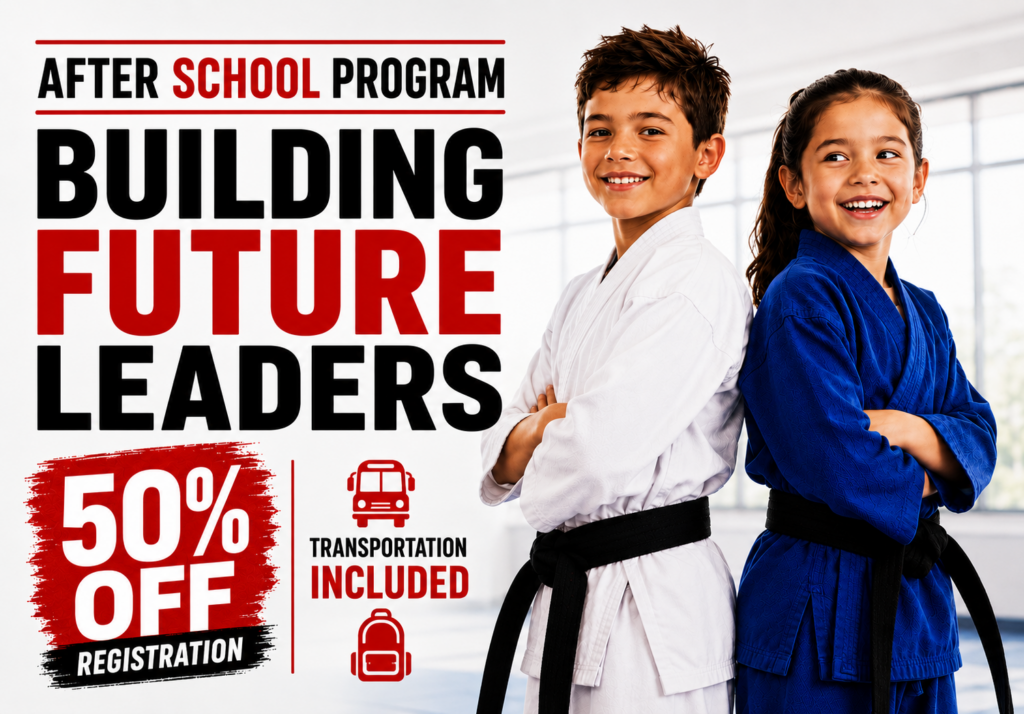
Get 50% Off Registration for the After-School Program.
Enrollment is limited and participating school routes may vary. Schedule a tour to meet the staff, see the facility, and learn whether the program is the right fit for your child.
Call Martial Arts World Orlando at 407-897-6000 or visit 1630 E. Colonial Drive, Orlando, FL 32803.